FORD C5ZA-3590-A Pitman Arm Great C7ZA-3590
fits model: Mustang. make: Ford. year: 1964–1967.
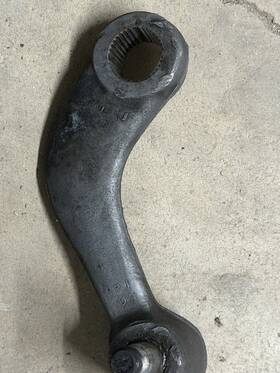
( Manufacturer Part Number: C5ZA-3590-A ), ( Type: Pitman Arm )
Review FORD To Early Pitman Arm In Great Condition fits MUSTANG 1964–1967
The **Ford C5ZA-3590-A (1964 1967 Mustang Pitman Arm)** and its companion part, the **C7ZA-3590**, represent essential components of the iconic 289 cubic-inch and 302 cubic-inch Ford V8 drivetrain, ensuring smooth and reliable rear-wheel drive performance in the legendary first-generation Mustang. Designed for the **9-inch rear axle** found in these classic muscle cars, the **C5ZA-3590-A Pitman Arm** is a precision-engineered part that connects the steering mechanism to the rear axle s differential, translating driver input into precise directional control. Crafted from high-quality steel, this arm is built to withstand the demands of high-performance driving, whether cruising down a highway or navigating tight corners at the track. Its robust construction and durable design make it a critical component for maintaining proper axle alignment and reducing wear on the axle housing and universal joints, which is especially important in vehicles equipped with the **C7ZA-3590 differential housing**, a key part of the drivetrain assembly.
The **C7ZA-3590 differential housing** itself is a foundational element of the Mustang s rear axle system, housing the ring-and-pinion gear set, axle shafts, and differential carrier. This housing is designed to accommodate the **9-inch Ford axle** found in the 1964 1967 Mustangs, providing a sturdy and sealed environment for the internal components while ensuring efficient power transfer from the engine to the wheels. Together, the **C5ZA-3590-A Pitman Arm** and **C7ZA-3590 differential housing** form a critical link in the drivetrain, enabling the Mustang s legendary blend of power and handling. Whether restoring a classic Mustang to its original glory or upgrading an existing drivetrain for enhanced performance, these components are indispensable for achieving the perfect balance of strength, durability, and responsiveness that Mustang enthusiasts seek. Their compatibility with the **289 and 302 V8 engines**, as well as the **C6ZA and C7ZA axle assemblies**, makes them a must-have for collectors, restorers, and performance-minded drivers looking to preserve or enhance the driving dynamics of these timeless American muscle cars.
### **Pros and Cons of Buying a 1964 1967 Ford Mustang with a C5ZA-3590 (Pitman Arm) or C7ZA-3590 Engine**
#### **Pros**
1. **Classic American Muscle Car Appeal**
The 1964 1967 Mustang, particularly in its early years, is one of the most iconic American muscle cars. Its retro styling, V8 power, and cultural significance make it a desirable collector s item. Owning one allows you to drive a piece of automotive history.
2. **Strong Engine Options (C5ZA-3590 & C7ZA-3590)**
- The **C5ZA-3590** (275 hp, 352 ci) and **C7ZA-3590** (271 hp, 352 ci) are high-performance variants of the 352 cubic inch Cleveland V8 engine.
- These engines were designed for high-revving performance, with a single four-barrel carburetor and solid lifters, making them more engaging to drive than modern fuel-injected engines.
- The **C7ZA** (1967) features a revised intake manifold and other tweaks for better mid-range power, while the **C5ZA** (1964 66) is slightly less refined but still capable of strong performance.
- Both engines are known for their smoothness and reliability when properly maintained, especially compared to later Ford V8s with more complex electronic systems.
3. **Driving Experience & Handling**
- The early Mustangs (especially the 1964 66 models) have a more engaging, manual-shift experience with their column shifters (pre-1965) or floor shifters (1965 67).
- The **Pitman arm** (a steering linkage component) in these models provides a more direct and tactile feel compared to later Mustangs with recirculating ball steering.
- The suspension is stiff and responsive, making them fun to drive on twisty roads, though they can be harsh on rough highways.
4. **Modding & Customization Potential**
- These engines respond well to modifications, including:- High-performance camshafts
- Intake manifold swaps (e.g., Holley or Edelbrock)
- Exhaust system upgrades
- Fuel injection conversions (though this can be complex)
- The body is also highly customizable, with options for restomods, paint jobs, and interior upgrades.
5. **Nostalgia & Community**
- The Mustang community is passionate and supportive, with plenty of clubs, forums, and events (e.g., Mustang Club of America, SEMA, Pebble Beach Concours).
- Restoring or maintaining one connects you with a legacy of Ford s early muscle car era.
6. **Potential for Appreciation**
- Well-preserved early Mustangs, especially with high-performance engines like the C5ZA or C7ZA, can appreciate in value over time, particularly if they are rare or in excellent condition.
---
#### **Cons**
1. **High Maintenance & Repair Costs**
- These cars are **not** built for modern reliability. Expect to deal with:- **Engine issues**: Oil leaks (valve cover, oil pan gaskets), rod bearing wear (common in high-mileage examples), and camshaft wear.
- **Transmission problems**: The C6 (3-speed manual) and C7 (4-speed manual) transmissions are durable but can develop synchro wear or clutch issues over time.
- **Suspension wear**: Bushings, ball joints, and shocks degrade quickly, requiring frequent replacements.
- **Electrical quirks**: Older wiring, faulty switches, and alternator issues are common.
- Labor costs for classic cars can be high, especially if you need specialized mechanics.
2. **Fuel Economy & Running Costs**
- The 352 ci V8 is thirsty, averaging **12 15 MPG** in a manual transmission. Gasoline costs add up quickly.
- Oil changes, spark plugs, and other routine maintenance are more frequent than in modern cars.
3. **Driving Limitations**
- **Highway comfort**: The stiff suspension and lack of modern sound insulation make long highway drives less enjoyable.
- **Fuel injection vs. carburetors**: While carburetors are fun, they require tuning and can be finicky in cold weather. Some owners opt for fuel injection conversions, which can improve reliability but may reduce the "classic" feel.
- **Modern safety concerns**: No modern safety features (airbags, stability control, etc.), making them less safe in a collision.
4. **Parts Availability & Cost**
- While parts are widely available, **rare or high-quality components** (e.g., original C5ZA/C7ZA engines, period-correct interiors) can be expensive.
- Some aftermarket parts may not fit perfectly, requiring modifications.
- If the car is heavily modified, finding original parts for a restoration can be difficult.
5. **Insurance & Registration Costs**
- Classic car insurance exists, but premiums can be **2 3 times higher** than for a modern car, especially if the Mustang is high-performance or modified.
- Some states have **higher registration fees** for vintage or high-value vehicles.
6. **Time-Consuming Maintenance**
- Unlike modern cars that can be serviced in a few hours, a Mustang from this era may require **days or weeks** of work for a full restoration or even routine maintenance.
- If you re not mechanically inclined, you ll need to budget time (or money for a mechanic) to keep it running.
7. **Potential for Hidden Problems**
- **Rust**: Early Mustangs (especially 1964 66) are prone to rust in the floor pans, rocker panels, and wheel wells. A thorough inspection is crucial.
- **Engine condition**: High-mileage examples may have **rod knock, cam wear, or cylinder head leaks**, which can be expensive to fix.
- **Transmission wear**: If the car has been driven hard, the transmission may need a rebuild.
8. **Depreciation Risk**
- While some early Mustangs appreciate, others depreciate if they are poorly maintained or heavily modified. A "project car" that s never finished can lose value quickly.
---
### **Conclusion & Recommendation**
#### **Who Should Buy One?**
A **1964 1967 Ford Mustang with a C5ZA-3590 or C7ZA-3590 engine** is ideal for:- **Enthusiasts who love classic muscle cars** and enjoy the hands-on experience of ownership.
- **Drivers who prioritize fun over convenience** those who appreciate a manual transmission, direct steering, and raw engine power.
- **Restorers or modders** who have the time, money, and mechanical skills to maintain or upgrade the car.
- **Collectors** who see value in automotive history and are willing to invest in preservation.
#### **Who Should Avoid One?**
Avoid buying one if:- You **need a reliable, low-maintenance daily driver** this is not that car.
- You **can t commit to regular maintenance** (oil changes, suspension work, electrical tweaks).
- You **don t enjoy mechanical work** or don t have access to skilled mechanics.
- You **can t afford unexpected repairs** (a blown head gasket or transmission rebuild can cost **$3,000 $6,000 **).
- You **prefer modern comforts** (climate control, safety features, fuel efficiency).
#### **Final Recommendation**
If you re **serious about owning one**, follow these steps:1. **Buy from a reputable seller** preferably someone with a **bill of sale, service records, and a pre-purchase inspection** (or get one done yourself).
2. **Prioritize condition over rarity** a **well-documented, low-mileage example** with a clean title is better than a "project car" with unknown issues.
3. **Budget for restoration** if the car needs work, factor in **$5,000 $20,000 ** depending on scope. A "driveable" example is often the best balance.
4. **Join the Mustang community** forums like **Mustang Club of America (MCA), Classic Mustang Club (CMC), or Facebook groups** offer invaluable advice.
5. **Consider a "restomod"** if you want a modernized version, look for a **1965 67 Mustang with a C7ZA engine** and plan for **fuel injection, modern suspension, and safety upgrades**.
#### **Best Approach:**- **For the casual enthusiast**: Buy a **restored or restored-to-factory-spec** example and enjoy it as a weekend project.
- **For the dedicated restorer**: Target a **project car** with potential but avoid ones with major structural or engine issues.
- **For the collector**: Seek out **rare variants** (e.g., 1964 2 2, 1967 Mach 1 with C7ZA) and preserve them in original condition.
Ultimately, a **1964 1967 Mustang with a C5ZA or C7ZA engine** is a **fantastic choice if you love classic cars and are prepared for the
Details:
I included pictures of the tag steering box for your research. Very nice condition should work on 1964-early 1967. Early 1967 16:1 ratio pitman arm.
part #: c5za3590 prices
- $105.00-$110.00
specifications pitmanidlear:
- for models: Mustang
- for makes: Ford
- for years: 1964-1967
- mpn: C5za-3590-a
- type: Pitman Arm
seller pitmanidlear:
- rating: 100.0%
- city: Oswego, New York
- # reviews: 601
returns pitmanidlear:
- policy: No Returns
payments pitmanidlear:
- wallet: Google-pay
- credit card: Diners-club
- other
shipping pitmanidlear:
- type: Fixed
- transit: 5-9 Days
- class: Standard
- cost: $10.00
- carrier: USPS
- service: USPS Ground Advantage
offer pitmanidlear:
- sold: 0
- availability: In Stock
- best offers: True
- started: April 20, 2026
- options: Ship-to-home
- quantity: 1
general pitmanidlear:
- Car Truck Parts Accessories > Steering Suspension > Pitman Idler Arms
- condition: Used
Ford C5ZA-3590 Is Similar To:
- 0b02485336xg2x7j Dlz Suspension Kit Control Arm Assembly For Ford Explorer Sport (22.1% similar) For better lubrication to be superseded CK8708T datatype: suspension control arm and ball joint ASSEMBLY1998 mercury mountaineer base sport utility 4-DOOR in. For better lubrication to be superseded CK8708T datatype: suspension control arm and ball joint ASSEMBLY2005 Mazda B3000BASE extended cab ...(August 21st, 2018)
- 11a-3590-a Ford Pitman Arm Nos (42.5% similar) ...(January 31st, 2019)
- 13438671 Aftermarket Products New Idler Arm Front Truck Ford Expedition Lincoln (27.2% similar) The items are brand new parts that look and fit same as original, except at a much better price...(March 23rd, 2018)
- 15308 Rare Parts Checker Edsel Ford Mercury Idler Arm Bushing Center (23.8% similar) Shipping varies by part and destination. This item has been designed and engineered with the latest in cad programs computer equipment. Collectors auto supply is your home for vehicles restoration needs. Safety, steering control, and all around smooth ride are the priorities when designing this ...(August 23rd, 2018)
- 15309 Rare Parts American Motors Edsel Ford Mercury Idler Arm Bushing (19.7% similar) We re big enough to deliver and small care. They make and source hard to find steering suspension components have been at it since this item has designed engineered with the latest in cad programs computer equipment. You can rely on rare parts products to keep your vehicle riding safely and ...(August 23rd, 2018)
- 15310 Rare Parts Ford Mercury Idler Arm Bushing Front For (28.6% similar) This item has been designed and engineered with the latest in cad programs computer equipment. They make and source hard to find steering suspension components have been at it since you can rely on rare parts products keep your vehicle riding safely comfortably. Collectors auto supply is your home ...(October 23rd, 2018)
- 15317 Rare Parts Ford Mercury Idler Arm Bushing Bracket End For (30.1% similar) Collectors auto supply is your home for vehicles restoration needs. Safety, steering control, and all around smooth ride are the priorities when designing this replacement part. What are looking. We re big enough to deliver and small care. Every part meets or exceeds the oem specifications. They ...(November 2nd, 2018)
- 15319 Rare Parts Ford Lincoln Mercury Idler Arm Bushing Center Link (30.7% similar) We re big enough to deliver and small care. Safety, steering control, and all around smooth ride are the priorities when designing this replacement part. What are looking. This item has been designed and engineered with the latest in cad programs computer equipment. Every part meets or exceeds the ...(August 23rd, 2018)
- 15320 Rare Parts Ford Mercury Idler Arm Bushing Center Link End (24.7% similar) What are looking. We re big enough to deliver and small care. This item has been designed and engineered with the latest in cad programs computer equipment. They make and source hard to find steering suspension components have been at it since collectors auto supply is your home for vehicles ...(August 23rd, 2018)
- 15322 Rare Parts Ford Lincoln Mercury Idler Arm Bushing Center Link (30.7% similar) Every part meets or exceeds the oem specifications. What are looking. We re big enough to deliver and small care. Safety, steering control, and all around smooth ride are the priorities when designing this replacement part. You can rely on rare parts products to keep your vehicle riding safely and ...(July 10th, 2018)
- 15333 Rare Parts Chevrolet Ford Mercury Idler Arm Bushing Bracket End (27.6% similar) This item has been designed and engineered with the latest in cad programs computer equipment. You can rely on rare parts products to keep your vehicle riding safely and comfortably. We re big enough to deliver and small care. Every part meets or exceeds the oem specifications. Shipping varies by ...(August 22nd, 2018)