NOS 3864707 Gm Power Steering Pitman Arm
fits model: Ss, Impala, Belair, Caprice. make: Chevy. year: 1965–1966.
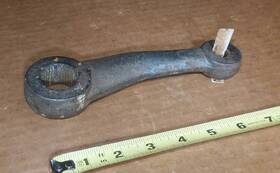
( Brand: Nos ), ( Manufacturer Part Number: 3864707 ), ( Type: Pitman Arm ), ( Oe/oem Part Number: Chevrolet Biscayne Convertible Hardtop Sport Coupe Post Sedan ), ( Vintage Part: Yes ), ( Universal Fitment: No ), ( Country Of Origin: United States )
Review NOS Gm Chevy Power Steering Pitman Arm fits IMPALA BELAIR CAPRICE SS 1965–1966
This is a meticulously crafted, high-performance **1965-1966 Chevrolet Impala Bel Air/Caprice Pitman Arm** for power steering applications, specifically designed to restore or enhance the smooth, responsive handling of your classic American muscle car. Part number **3864707** identifies this as a genuine OEM-style replacement component, engineered to match the precise specifications of the original equipment used in the 1965 and 1966 model years. Crafted from durable, high-grade steel, this pitman arm is forged to withstand the rigors of daily driving, ensuring longevity and reliability while maintaining the authentic look and feel of the era. The arm features a robust, machined shaft with a threaded end, allowing for easy installation and adjustment, and is designed to integrate seamlessly with the steering linkage, including the center link and idler arm, to deliver the precise steering geometry required for optimal road performance. Whether you're restoring a show-quality Bel Air or a high-performance Caprice, this pitman arm is a critical component for achieving the correct steering ratio and eliminating any play or slop in the system. Its compatibility with the power steering setup of these iconic models ensures that your steering remains effortless and precise, just as it was intended to be in the golden age of American automotive engineering. Perfect for both restoration projects and maintenance upgrades, this part embodies the blend of durability and performance that defines the legendary Chevrolet lineup of the mid-1960s.
### **Pros and Cons of Buying a 1965-1966 Chevy Impala/Bel Air/Caprice with Power Steering and a Pitman Arm (NOS #3864707)**
#### **Pros**
1. **Classic American Muscle Car Heritage**
- The 1965-1966 Chevy Impala/Bel Air/Caprice represents the golden era of American automotive design, blending performance with comfort. These models are iconic, especially with the available V8 engines (such as the 283, 327, or 396 cubic inch powerplants), which make them desirable for enthusiasts.
2. **Strong Engine Options**
- The **327 V8** (common in the 1965-66 models) is a legendary engine known for its reliability, tunability, and ability to handle high-performance modifications. The **396 V8** (found in the Caprice and some high-end Impalas) offers even more power and torque, making it a favorite for drag racing and street performance.
- The **Turbo Fire 396** (introduced in 1966) is particularly sought after for its solid lifter design, which is more durable than the hydraulic lifter versions.
3. **Power Steering and Modern Convenience**
- Power steering was a luxury in the mid-1960s, and it remains a desirable feature today, reducing driver fatigue on long drives. The presence of power steering in this NOS (New Old Stock) part suggests the car was likely well-maintained or restored at some point.
4. **Pitman Arm Condition**
- The pitman arm is a critical component of the steering system. A NOS pitman arm (especially from a high-mileage or well-preserved example) indicates that the steering gear may still be in good condition, reducing the need for immediate replacement. This can save money on restoration costs.
5. **Potential for Restoration or Daily Driving**
- If the rest of the car is in decent shape, this could be a project car or a fun daily driver. The body styles (Impala, Bel Air, or Caprice) offer a range of options from the sporty Bel Air to the more luxurious Caprice.
- The 1965-66 models are less common than later "muscle car" Chevys (like the 1967-69 SS models), making them more affordable for buyers who want a classic without paying premium prices.
6. **Community and Parts Availability**
- The Chevy Impala/Bel Air/Caprice has a strong following, with ample aftermarket support for parts, restoration guides, and performance upgrades. Swap meets, online forums (e.g., Chevyforum, Bring a Trailer), and specialty shops cater to these models.
7. **Potential for High Value with Restoration**
- A well-restored 1965-66 Chevy with a clean title, original or restored engine, and proper documentation can appreciate significantly, especially if it s shown at car shows or concours events.
---
#### **Cons**
1. **Age and Wear**
- At 57-59 years old, these cars are inherently high-mileage projects. Even with NOS parts, the rest of the car (transmission, suspension, brakes, electrical system, etc.) may require significant attention.
- Rust is a major concern, particularly in frame rails, floor pans, and wheel wells. A thorough inspection (or a known clean history) is essential.
2. **Reliability Concerns**
- While the **327 and 396 engines** are robust, they are not immune to wear. Issues like valve stem leaks, rod bearing wear, or camshaft problems can arise, especially if the engine has high miles or was not properly maintained.
- The **transmission** (especially manuals like the M20 or M21) can be finicky, requiring frequent fluid changes and potential rebuilds.
- **Power steering** systems from this era can leak fluid, and the pump may wear out over time, requiring replacement.
3. **Cost of Restoration**
- Restoring a 1965-66 Chevy to showroom condition can be expensive. Parts like NOS fenders, quarter panels, or interior components are costly, and labor for classic cars is often priced higher than modern vehicles.
- If the car is a "project," budget for:- Frame repair or replacement (if rusted).
- Engine rebuild or swap (if the existing one is bad).
- Suspension and steering overhaul (including tie rods, ball joints, and bushings).
- Electrical system updates (alternator, wiring, gauges).
- Interior replacement (seats, dash, carpet).
4. **Fuel and Emissions Compliance**
- Modern fuel standards mean that older cars may require modifications to pass emissions tests in many states. A **smog pump** or **EPA-approved fuel system upgrade** may be necessary.
- Running the car on modern fuel (higher octane) can also affect performance if the engine isn t tuned properly.
5. **Driving Experience Limitations**
- While power steering is a plus, the ride quality may not be as smooth as modern cars due to softer suspension setups and less refined steering geometry.
- Braking systems (especially drums) can be less effective than modern discs, requiring more effort to stop, especially if the car is loaded or driven aggressively.
6. **Insurance and Storage Costs**
- Classic car insurance can be expensive, especially for high-performance models. Storage (indoor or climate-controlled) is also a significant ongoing cost to preserve the vehicle.
- If the car is not driven regularly, components (tires, fluids, battery) can degrade, leading to additional maintenance.
7. **Market Saturation and Competition**
- While these models are desirable, there are many similar Chevys (and Fords, Pontiacs, etc.) on the market. Standing out requires extra effort in restoration or documentation (e.g., originality, concours-level finishes).
- Buyers may face competition from other enthusiasts, driving up prices for well-preserved examples.
8. **Potential for Hidden Issues**
- Even with NOS parts, the car could have hidden problems like:- **Frame cracks** (common in older Chevys due to rust or poor welding).
- **Transmission or differential leaks**.
- **Electrical gremlins** (alternator failure, bad ground wires).
- **Suspension wear** (worn shocks, sagging springs).
---
### **Ending Conclusion**
Buying a **1965-1966 Chevy Impala/Bel Air/Caprice with power steering and a NOS pitman arm** can be a rewarding experience for an enthusiast who enjoys classic American muscle cars. The engine options (especially the 327 or 396) are legendary, and the car s iconic status ensures a strong community for support. However, the age of the vehicle means that significant restoration work will likely be required, and costs can add up quickly.
This car is best suited for:- **Enthusiasts who enjoy hands-on restoration projects**.
- **Those who prioritize driving history and originality over modern convenience**.
- **Buyers who have the budget and time to address common issues (rust, electrical, suspension, etc.)**.
If you re looking for a **low-maintenance daily driver**, this is not the right choice. But if you re passionate about classic Chevys and willing to invest time and money into bringing it back to life, it can be an incredibly satisfying and valuable project.
---
### **Recommendation**
1. **Get a Professional Inspection**
- Before purchasing, have a **trusted classic car mechanic** inspect the vehicle thoroughly. Look for:- Frame integrity (no cracks or major rust).
- Engine condition (compression, leaks, wear).
- Transmission and differential health.
- Electrical system functionality.
- Suspension and steering components (not just the pitman arm).
2. **Verify the NOS Pitman Arm s Provenance**
- Ensure the pitman arm is **genuine NOS** (not a reproduction) and that it came from a car with a clean history. Ask for documentation or proof of origin.
3. **Budget for Restoration**
- If buying as a project, set aside **at least $10,000 $20,000 ** for a mid-level restoration, depending on the car s current condition. High-end restorations can exceed $50,000.
4. **Consider a Known Clean Example**
- If possible, look for a car with a **restored engine, clean title, and documented history**. This reduces unknown variables and saves money long-term.
5. **Join the Classic Chevy Community**
- Engage with forums (e.g., Chevyforum, Bring a Trailer) or local clubs to learn from others who have restored similar cars. This can provide valuable advice and part sources.
6. **Decide on Your Goals**
- Are you restoring it to **original condition**, **showroom spec**, or a **modernized performance build**? Your goals will dictate the parts and modifications you choose.
7. **Test Drive and Road Test**
- If possible, take the car for a **long test drive** to check for steering issues, engine performance, and overall drivability. Listen for unusual noises and feel for smooth operation.
**Final Verdict:**If you re **passionate about classic Chev
Details:
New old stock GM# 3864707 and cast the same number pitman arm for 1965-66 Chevrolet passenger cars with power steering. Most of those guys do not even own their parts, they are relying on the parts being shipped from some third party IF have them and you know condition until it arrives at your door. Getting to be a very hard find part NOS. The GM bin tag that was stuck in one end says it cast/forged '3855956' but is cast the same as part number, rather faintly there.
Ship cost is for continental US 48 states.
part #: 3864707 prices
- $20.00-$135.00
specifications pitmanidlear:
- for models: Ss, Impala, Belair, Caprice
- for makes: Chevy
- for years: 1965-1966
- brand: Nos
- mpn: 3864707
- type: Pitman Arm
- oe/oem part number: Chevrolet Biscayne Convertible Hardtop Sport Coupe Post Sedan
- vintage part: Yes
- universal fitment: No
- country of origin: United States
seller pitmanidlear:
- rating: 100.0%
- # reviews: 4222
- city: Adel, Georgia
shipping pitmanidlear:
- cost: $12.00
- transit: 4-9 Days
- service: Economy
- class: Economy
- type: Fixed
returns pitmanidlear:
- policy: No Returns
offer pitmanidlear:
- sold: 0
- availability: In Stock
- options: Ship-to-home
- started: April 5, 2026
- quantity: 1
payments pitmanidlear:
- credit card: Discover
- other
- wallet: Apple-pay
general pitmanidlear:
- condition: Used
- Car Truck Parts Accessories > Steering Suspension > Pitman Idler Arms
Nos 3864707 Is Similar To:
- 2 5968466 5968465 2 Nos Chevy (20.5% similar) 1 set 2 each back-up light lamp lens trim bezel molding - ornament gm part group. 1 set of 2 each reverse back-up light lamp - lens gm part group. Back-up light lamp lens - ornament set qty left hand driver side or right passenger. 680 location example: photo 4 - figure no. 697 location example: ...(September 11th, 2017)
- 10000063 10081636 10164151 10081635 Nos Chevy Monte Carlo Camaro Pontiac Firebird Rear End Lower Control Arm Set (30.2% similar) 1 set of 2 each rear axle lower control arm gm part group figure no. 382, shim rear stabilizer shaft gm part qty. Rear axle lower control arm set qty. 9 nut TRX M10X1 bolt hex head M10X1. 5X65 gm part qty. 2 figure no reinforcement rear stabilizer lower control arm gm part qty. 5 gm part qty. 4 ...(October 16th, 2015)
- 10273668 10273669 10182044 10182045 Nos Chevy Camaro Ss Z28 Rs 1993 1997 Hood Air Intake Scoop Set Screen (18.8% similar) 1 air intake hood extractor scoop screen gm part group no Rh right hand passenger side original gm part discontinued use gm part qty. Air intake hood screen scoop set qty Rh right hand passenger side qty air intake hood extractor scoop gm part group no...(September 22nd, 2016)
- Set Sway 10298581 Bar Rear Bracket Nos Bushing Camaro Ss Z28 Chevrolet Rs Chevy 1998-2002 (17% similar) Code F41 firm ride handling Camry Pontiac application base model, trans am, formula fire hawk all model's with code F41 firm ride handling fire bird Nos gm new gm package included. Rear stabilizer sway bar bracket bushing set qty chevy application base model, Z28, ss, rs all model's. Hole size photo...(April 11th, 2015)
- 12337826 11504655 Nos Chevy Monte Carlo Chevrolet Camaro Head Light Lamp Filler Set Screw (27.3% similar) 1 set of 4 each headlight lamp opening filler screw gm part group headlight lamp opening filler qty set of 2 each headlight lamp opening filler gm part group qty chevrolet application el amino with quartz headlamp TT4 Monte Carlo ss YG5 Monte Carlo sport package Z65 super sport Monte Carlo ss recoup...(November 1st, 2015)
- 11a-3590-a Ford Pitman Arm Nos (34.2% similar) ...(January 31st, 2019)
- El 12308789 Carlo Idler Monte Camino Nos Chevelle Arm 1976-1977 Chevrolet (22.5% similar) Successful bidder to prepay high bid and free shipping within the us. Please l k at the pictures before buying. Keywords Malibu,Malibu classic,lacuna,type 3 here to view my other offers. The gm parts book shows that the idler arm is correct for all Chevalier,el amino and Monte Carlo model's. What ...(April 2nd, 2015)
- 12338034 Nos Chevy K5 Blazer Gmc Jimmy 1983 1984 1985 1986 1987 Hood Stop Bumper Set 2 (30.1% similar) 170 hood adjustable rubber stop bumper chevrolet application Camry Camry truck c k, suburban chevy truck D1, d3 military M1009 CCTV photo 5 figure no. 1 set 2 each hood adjustable rubber stop bumper gm part original gm part group 12. Hood adjustable rubber stop bumper qty. 22 GMC application chevy ...(May 1st, 2016)
- 1379900 Buick Nos Electra Steering Idler Arm Series (36.2% similar) I offer free shipping on this item to the 48 lower states. May fit other model's but not sure about that. A lot of parts have factory flaws. Actual offer items are pictured. Just because it is Nos does not mean may meet your expectations...(January 11th, 2019)
- 14062683 14030879 Genuine Gm Nos Chevy Camaro Pontiac Firebird Gas Pedal Kit (30.7% similar) Gas accelerator - pedal kit qty. 452 qty gas accelerator pedal - pin gm part group 459 chevy application: gm part 1985 Camry, Camry parts book chevrolet 2000 c k pick-up truck 15 25 Cheyenne, Silverado, SCOTTSDALE1986 1987 , Pontiac 1992 fire bird SCOTTSDALE1982- 1987 Nos new genuine package...(March 26th, 2018)
- 14064382 14065761 Genuine Gm Nos Chevy Camaro Berlinetta Floor Console Trim Gear (37.1% similar) 006 color: black location example: photo figure no. Qty a MD8 control lever - knob only gm part group automatic transmission floor shift console trim plate. 5KNOB only less - button, clip retainer re use original gm parts chevy application: automatic transmission 700R4 MD8 Berliners Nos new genuine ...(June 12th, 2019)