3714622 Steering Gear Pitman Idler Arm V8
fits model: Corvette. year: 1955–1962.
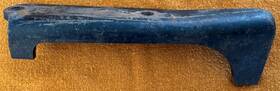
( Brand: General Motors ), ( Manufacturer Part Number: 3714622 ), ( Type: Idler Arm ), ( Maximum Length: 7 5/8 ), ( Vintage Part: Yes ), ( Country Of Origin: United States ), ( Performance Part: No )
Review GENERAL MOTORS V8 Steering Gear Pitman Idler Arm Stop #3714622 fits CORVETTE 1955–1962
The **1955 1962 Chevrolet Corvette V8 Steering Gear Pitman Arm and Idler Arm Assembly** represents a quintessential piece of automotive heritage, embodying the raw mechanical elegance and engineering ingenuity of an era when American muscle cars were still in their formative, high-performance infancy. This rare and highly sought-after component set is integral to the iconic Corvette s legendary "RPO 123" power steering system, which, despite its simplicity, delivered a level of precision and responsiveness that set the standard for its time. The **Pitman arm**, a robust forged steel linkage, translates the rotational motion of the steering gear s worm shaft into linear movement, directly driving the steering linkage to the front wheels, while the **idler arm** serves as a critical pivot point, ensuring smooth, balanced steering geometry and reducing unnecessary wear on the system by maintaining proper tension and alignment. Crafted from high-grade steel and machined to exacting tolerances, these components were designed to endure the relentless demands of high-speed driving, aggressive cornering, and the Corvette s signature blend of brute power and nimble handling. The **1955 1962 models** particularly the early "Split Window" and "Coupe" iterations feature a unique steering gear design that, while less refined than later iterations, exudes a raw, unfiltered charm that appeals to purists and restorers alike. Whether sourced from a meticulously preserved original Corvette or a carefully rebuilt example, this assembly is a tangible link to the golden age of American automotive craftsmanship, where every bolt, every linkage, and every mechanical interaction contributed to an experience that was as much about engineering as it was about driving passion. For collectors, restorers, and enthusiasts, this Pitman and idler arm set is not merely a functional part but a piece of automotive history one that embodies the spirit of innovation and boldness that defined the Corvette s early years.
### **Pros and Cons of Buying a 1955 1962 Corvette V8 with Steering Gear Pitman/Idler Arm Issues**
#### **Pros**
1. **Classic American Muscle Car Heritage** The 1955 1962 Corvette is one of the most iconic American sports cars, representing the early days of Chevrolet s performance legacy. Owning one allows you to be part of a storied automotive history.
2. **Strong V8 Engine Options** The 265 cubic inch (1955 1957) and 283 cubic inch (1958 1962) small-block V8 engines are legendary for their simplicity, reliability, and aftermarket support. With proper maintenance, they can produce impressive power (especially with modern upgrades).
3. **Timeless Design** The mid-engine (1957) and front-engine (1955 1956, 1958 1962) Corvettes feature aggressive, aerodynamic styling that remains desirable. The 1962 split-window coupe is particularly sought after.
4. **Moderate Running Costs (Compared to Later Models)** While not cheap to maintain, early Corvettes are generally more affordable to repair than later high-performance models (e.g., 1967 1969 L88/L72). Parts are widely available, and labor costs are reasonable for classic car shops.
5. **Strong Community & Support** The Corvette community is vast, with numerous clubs (e.g., Corvette Restoration Specialists, VetteVette), forums (like CorvetteForum), and aftermarket suppliers. This makes troubleshooting and finding parts easier.
6. **Potential for Restoration or Driving as-Is** If you enjoy hands-on projects, a rusty or neglected example can be a rewarding restoration. Alternatively, a well-maintained daily driver can still be fun and practical for short trips.
7. **Investment Potential** Well-preserved examples, especially rare models (e.g., 1957 Sting Ray prototype, 1962 split-window coupe), appreciate in value over time. Even common models can hold value if maintained properly.
---
#### **Cons**
1. **Steering Gear Pitman/Idler Arm Issues Are Common** The 1955 1962 Corvettes used a simple but unreliable steering linkage. The **pitman arm** and **idler arm** can wear out, leading to:
- **Loose or stiff steering** (difficulty turning).
- **Excessive play** in the steering wheel.
- **Worn bushings** that may require frequent replacement.
- **Misalignment** if not properly adjusted, leading to uneven tire wear.
- **Potential for binding** if the linkage is not lubricated or maintained.
Replacing these components can be labor-intensive and may require machining or welding if parts are missing or damaged.
2. **Rust & Structural Corrosion** Many early Corvettes, especially those from the 1950s, suffer from **frame rust** (particularly around the rear quarter panels, sills, and floor pans). Rust can compromise structural integrity, making repairs costly.
3. **Electrical & Wiring Challenges** The original wiring harnesses are **outdated and prone to failure**. Common issues include:- Failing alternators or starters.
- Corroded or broken ground wires.
- Poorly insulated connections leading to intermittent electrical problems.
- Modern aftermarket wiring may be needed for reliability.
4. **Transmission & Drivetrain Wear** The **2-speed Powerglide (1955 1957)** and **3-speed manual (1958 1962)** transmissions are simple but can develop leaks, rough shifting, or internal wear. Clutches also wear out quickly if not maintained.
The **rear end (differential)** may require **seal replacement** or **gear replacement** if it s worn out, especially in high-mileage examples.
5. **Braking System Limitations** Early Corvettes had **drum brakes** (1955 1957) or **weak disc brakes** (1958 1962). Modern braking upgrades (e.g., larger discs, calipers, or anti-lock systems) are often necessary for safe stopping power.
6. **Fuel & Emissions Compliance** If you plan to drive the car legally on public roads, you ll need to:- **Modify the exhaust** to meet emissions standards (catalytic converters, mufflers, etc.).
- **Use modern fuel** (unleaded, high-octane if needed).
- **Ensure the car passes emissions tests** (if required in your state/country), which can be difficult for older models.
7. **High Maintenance & Labor Costs** While parts are available, **labor costs add up**, especially for:- **Engine rebuilds** (valve train, bearings, seals).
- **Steering & suspension overhauls**.
- **Bodywork** (rust repairs, paint, upholstery).
- **Specialized knowledge** (e.g., vintage wiring, period-correct restoration).
8. **Limited Practicality for Daily Use** Early Corvettes are **not ideal for daily driving** due to:- **Poor fuel economy** (around 10 15 MPG in a stock 283 V8).
- **Narrow seats** (uncomfortable for tall drivers or passengers).
- **Basic interior** (no power windows, minimal sound insulation).
- **Reliability concerns** (if not well-maintained, breakdowns can be frequent).
9. **Depreciation Risk** Unlike later Corvettes (1963 1967), early models **do not hold value as well** unless they are **restored to concours condition**. A poorly maintained example can lose value quickly.
10. **Finding a Reliable Example Is Difficult** Many early Corvettes have been **abused, neglected, or stripped for parts**. Even "restored" examples may have **hidden issues** (e.g., frame rust, electrical problems, transmission wear). Due diligence is required.
---
### **Conclusion**
Buying a **1955 1962 Corvette V8 with steering gear pitman/idler arm issues** can be a **rewarding but challenging** experience. The car offers **timeless appeal, strong engine potential, and a place in automotive history**, but it comes with **significant mechanical and maintenance hurdles**, particularly with **steering, rust, electrical, and drivetrain concerns**.
If you are **passionate about classic cars, enjoy hands-on restoration, and have the budget for repairs**, this can be a **great project** especially if you find a **well-documented, partially restored, or already-running example**. However, if you seek a **reliable, low-maintenance daily driver**, a later Corvette (e.g., 1963 1967) or a modern muscle car may be a better choice.
---
### **Recommendation**
1. **If You Want a Drivable, Low-Maintenance Classic:**- Consider a **1963 1967 Corvette** (especially a **1965 1967** with the **small-block V8 and improved suspension**).
- Look for a **restored or well-maintained 1958 1962 model** with **proven steering, no major rust, and a reliable transmission**.
- **Budget for a full inspection** (steering, frame, electrical, drivetrain) before purchasing.
2. **If You re Committed to a 1955 1962 Project:** - **Prioritize a car with:**- **Minimal frame rust** (check sills, rear quarter panels, floor pans).
- **A known-good engine** (preferably with a **rebuilt valve train and fresh bearings**).
- **A functioning steering system** (pitman arm, idler arm, drag link in good condition).
- **A reliable transmission** (Powerglide or manual with no major wear).
- **Budget for:**- **Steering overhaul** ($500 $1,500 depending on labor).
- **Rust repairs** ($1,000 $5,000 ).
- **Electrical upgrades** ($300 $1,000).
- **Braking system refresh** ($500 $1,500).
- **Join Corvette restoration forums** (e.g., CorvetteForum) to seek advice on specific issues.
3. **If You re Unsure:**- **Start with a rental or test drive** to see if you enjoy the driving experience.
- **Consider a "starter" Corvette** (e.g., a **1963 1967** that s easier to maintain) before committing to a 1950s model.
- **Avoid "too good to be true" deals** many early Corvettes are sold as "restored" but have hidden problems.
### **Final Verdict**
A **1955 1962 Corvette with steering issues** is a **
Details:
Ships to USA address only. Nice original Pitman Arm Stop for 1955-1962 Corvette V8. Has been stored away in a box for decades. Minor surface rust, but no breaks, bends or repairs.
part #: 3714622 price
- $99.99
specifications pitmanidlear:
- for models: Corvette
- for years: 1955-1962
- brand: General Motors
- mpn: 3714622
- type: Idler Arm
- maximum length: 7 5/8
- vintage part: Yes
- country of origin: United States
- performance part: No
general pitmanidlear:
- Car Truck Parts Accessories > Steering Suspension > Pitman Idler Arms
- condition: Used
seller pitmanidlear:
- # reviews: 129
- city: Spring Valley, California
- rating: 100.0%
payments pitmanidlear:
- wallet: Paypal
- credit card: Diners-club
- other
returns pitmanidlear:
- policy: Returns Accepted
- paid by: Seller
- time: 30 Days
offer pitmanidlear:
- best offers: True
- availability: In Stock
- sold: 0
- quantity: 1
- started: February 14, 2026
- options: Ship-to-home
shipping pitmanidlear:
- transit: 5-10 Days
- carrier: USPS, UPS
- service: USPS Ground Advantage, UPS Ground Saver, UPS Ground
- class: Standard, Economy
- cost: $8.10
- type: Calculated
General Motors 3714622 Is Similar To:
- 07837645 General Motors Gm Parts (31.4% similar) Discontinued nos gm factory parts...(January 30th, 2018)
- 10666609-001 General Dynamics Steering Flange (32.8% similar) This steering flange is across and inside of...(October 2nd, 2017)
- 10686262-001pw General Dynamics Steering Gear (34.3% similar) ...(February 13th, 2018)
- 112340016 Am General Steering Idler Arm Hmmwv Chmmwv Truck (38.1% similar) Bids cannot be cancelled or retracted after the item ends. Government surplus and Harley Davidson motorcycles parts. We respond as quickly possible, but please realize due to volume usually within 24 hours. Check the shipping calculator for a quote to you. All shipped items are insured for full ...(June 19th, 2018)
- 12340015 Am General Humvee Pitman Arm Early Style (36.2% similar) Thanks GREENIE9 quote.sto anywhere in lower 48 us states only...(April 20th, 2018)
- 12446802 Am General Hmmwv Steering Column Housing (33.3% similar) ...(July 18th, 2018)
- 14002552 General Motors Pitman Arm (40.7% similar) ...(October 29th, 2018)
- 14013071 General Motors Gm Chevy (29.8% similar) Front suspension - brake components knuckle left 4WD ton new gm spindle assembly. New in the box. The pictures before buying. Item number core PRICEPRICE14013071 front suspension - components knuckle knuckle, all, 10-20 series, left side 4WD. May have a little surface rust as pictured. The part ...(October 1st, 2017)
- 14032278 General Motors Chevrolet Blazer Pitman Arm (47.1% similar) ...(March 18th, 2019)
- 14074904 General Motors New Oem Gm Astro Pitman Arm (45.7% similar) Brand new oem. New oem gm Astor pitman arm...(October 28th, 2018)
- 15651267 Gm General Motors Acdelco (27.6% similar) Higher shipping and handling cost prevail. All photography is for illustrative purposes only and persons depicted are model's. Free shipping: if an item is offered with shipping - for lower 48 USA only...(December 4th, 2017)