BMW 32211106642 Steering Pitman Arm E12 EARLYE24
fits model: E12. make: Bmw.
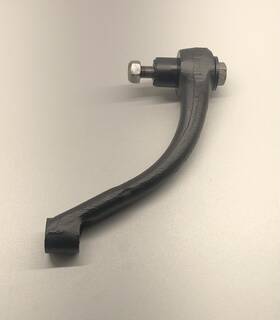
( Manufacturer Part Number: 32211106642 ), ( Type: Pitman Arm )
Review BMW Steering Pitman Arm Genuine fits E12
The **BMW E12/E24 Steering Pitman Arm (Part Number: 32211106642)** is a critical component of the vehicle s recirculating ball steering system, essential for translating driver input at the wheel into precise directional control. Manufactured to BMW s exacting standards, this pitman arm is designed to interface seamlessly with the steering gearbox, transmitting torque from the steering column to the tie rods while maintaining optimal alignment and responsiveness. Crafted from high-grade steel, it features a robust, machined shaft with a threaded end that securely fastens to the steering gear s output spindle, ensuring durability under the demanding forces of daily driving, sharp turns, and varying road conditions. The arm s design incorporates a spherical bearing at the attachment point, allowing for smooth articulation and compensating for minor misalignments, which helps reduce wear on both the pitman arm and the steering gear itself. This particular part is compatible with a range of BMW models spanning the **E12 (1975 1987)** and **E24 (1976 1987)** series, including the 320i, 320e, 323i, 325i, and 325e, making it a versatile upgrade or replacement option for enthusiasts restoring or maintaining classic BMWs. Whether used in a meticulously restored project car or as a direct replacement for a worn-out original component, this pitman arm delivers the reliability and performance expected from BMW s engineering legacy, ensuring smooth, accurate steering with minimal play or resistance. Its compatibility with aftermarket steering upgrades, such as aftermarket tie rods or gearbox modifications, further enhances its value for customization projects. For collectors and drivers who prioritize authenticity and precision, this part represents a direct fitment solution that preserves the integrity of the original steering system while extending its lifespan.
### **Pros and Cons of Buying a BMW E12 (Early E24) 322i with a Steering Pitman Arm Issue**
#### **Pros**
1. **Classic BMW Driving Experience** The E12/E24 322i offers a refined, sporty driving experience with precise handling, a well-tuned suspension, and a naturally aspirated inline-six engine that delivers strong mid-range torque and a satisfying exhaust note.
2. **Strong Engine and Reliability (When Maintained)** The M110/M111 inline-six engines in the 322i are robust if properly maintained. With regular oil changes and attention to minor wear items, they can last well beyond 200,000 miles.
3. **Timeless Design and Resale Value** The E12/E24 322i retains strong collector appeal, especially in well-documented, low-mileage examples. Well-preserved models hold value better than many contemporaries.
4. **Mechanical Simplicity Compared to Modern BMWs** Unlike modern BMWs with complex electronics, the E12/E24 has fewer high-tech failure points, making repairs more straightforward for those with mechanical skills.
5. **Aftermarket and Restoration Potential** There is a strong aftermarket for parts, restoration guides, and performance upgrades. A projectable example can be transformed into a showstopper or a reliable daily with the right investment.
6. **Lower Running Costs (If Well-Maintained)** Compared to modern BMWs, fuel efficiency is decent (around 18-22 MPG), and basic maintenance (oil, filters, brakes) is relatively affordable.
7. **Nostalgia and Enthusiast Community** Owning a classic BMW like this connects you to a passionate community, with clubs, meets, and shared knowledge that can be invaluable.
---
#### **Cons**
1. **Steering Pitman Arm Issues Are Common** The pitman arm in older BMWs (especially E12/E24 models) is prone to wear, cracking, or failure due to age, rust, or improper installation. A failing pitman arm can lead to:
- **Loose or erratic steering** (play in the wheel).
- **Difficulty turning the wheel** (increased resistance).
- **Potential steering rack or tie rod damage** if ignored.
- **Safety risks**, as it affects directional control.
- **Costly repairs** if the arm is cracked or the rack is damaged.
**Note:** If the pitman arm is already failing, this is a **major red flag** it suggests neglect or a car that has been driven with a known issue. Replacing it (or the entire steering rack) can cost **$500 $1,500 **, depending on parts and labor.
2. **High Maintenance and Wear Items** Classic BMWs require frequent attention to:- **Suspension components** (ball joints, bushings, shocks).
- **Brakes** (drums on early models, discs on later ones both wear out).
- **Timing belt** (critical on the M110/M111 failure can destroy the engine).
- **Water pump and thermostat** (often linked to the timing belt).
- **Rust** (especially in the chassis, subframe, and wheel wells).
- **Electrical issues** (failing alternators, distributors, or wiring harnesses).
3. **Rust and Structural Concerns** Many E12/E24 models, especially those from the late 1970s/early 1980s, suffer from:- **Rust in the subframe** (common in the rear crossmember).
- **Rust in the wheel wells and fenders**.
- **Rust in the floor pans** (leading to floorboard rot).
- **Rust in the suspension mounts** (affecting ride quality).
- **Rust in the exhaust system** (leading to leaks and noise).
A thorough inspection (or a **rust report**) is essential before buying.
4. **Fuel and Emissions Compliance** Modern fuel standards mean:- **Lead-free fuel** is required (older BMWs were designed for leaded gas).
- **Smog checks** may be required in some areas (especially for California models).
- **Exhaust modifications** (if needed for emissions) can be costly.
5. **Parts Availability and Cost** While parts exist, some components (especially rare or discontinued items) can be:- **Expensive** (e.g., original BMW or high-quality aftermarket parts).
- **Hard to find** (e.g., specific suspension bushings, wiring harnesses).
- **Requiring sourcing from specialty suppliers** (e.g., ECS, BMW Classic, or eBay).
6. **Driving Limitations** Compared to modern cars, the E12/E24 has:- **Slower acceleration** (0-60 mph in 9-10 seconds, depending on model year).
- **Less refinement** (noise, vibration, and harshness at higher speeds).
- **Poor fuel economy** (around 18-22 MPG, worse than most modern cars).
- **Less safety** (no ABS, airbags, or modern crash structures).
7. **Insurance and Registration Costs** Classic BMWs can be **expensive to insure**, especially if they re not properly documented as "classic" or "show" vehicles. Some insurers may classify them as **high-risk** due to their age and repair costs.
8. **Project Car Potential** If the car is in **poor condition**, restoring it to running order can be a **major undertaking** requiring:- **Mechanical expertise** (or a willing mechanic).
- **Significant time and money** (budgets of **$5,000 $20,000 ** are common for a full restoration).
- **Risk of over-restoring** (some buyers prefer a "driven" example over a pristine show car).
---
### **Key Questions to Ask Before Buying**
1. **Has the pitman arm been replaced recently?** If not, **why?** A failing pitman arm is a **critical safety issue**.
2. **What is the car s maintenance history?** Are oil changes, timing belts, and major services documented?
3. **Has the car been rust-proofed?** If not, expect **hidden rust** that could require major repairs.
4. **Does the car have a clean title?** Avoid salvaged or rebuilt titles unless you re prepared for a project.
5. **Has the car been in an accident?** Even minor accidents can lead to **hidden structural damage**.
6. **What is the car s daily use?** Is it a **weekend project** or a **daily driver**? If the latter, ensure it s in **good enough condition** for regular use.
7. **Are there any known electrical or fuel system issues?** Distributor problems, fuel pump failures, or wiring issues are common.
---
### **Conclusion and Recommendation**
#### **Buy If:**You are an **enthusiast who enjoys mechanical projects** and have the **time, money, and skills** to restore/maintain the car.
You find a **well-documented, low-mileage example** with **no major rust or mechanical issues** (including a **properly replaced pitman arm**).
You are buying it **as a collector s item** or a **weekend project** rather than a daily driver.
You can **afford unexpected repairs** (budget **at least $5,000 $10,000** for a basic restoration).
You **test drive it thoroughly** and confirm:- **Steering feels firm with no play** (pitman arm is good).
- **No unusual noises** (engine, suspension, exhaust).
- **Brakes work properly** (no grinding or excessive travel).
- **No visible rust** (check wheel wells, subframe, floor pans).
#### **Avoid If:**The **pitman arm is failing or unknown** this is a **dealbreaker** for safety.
The car has **major rust** (subframe, floor pans, suspension mounts).
You **cannot afford repairs** classic BMWs are **not cheap to maintain**.
You **need a reliable daily driver** modern cars are far safer and more practical.
The **maintenance history is incomplete or suspicious** (e.g., no oil changes, no timing belt records).
You **lack mechanical experience** this is **not a plug-and-play car**.
---
### **Final Recommendation**
**If the pitman arm is in good condition and the car is otherwise well-maintained with minimal rust and a clean history, it can be a rewarding purchase for the right buyer.** However, **if the pitman arm is failing or the car shows signs of neglect, walk away** the risks (both financial and safety-related) are too high.
**Best Approach:**- **Get a pre-purchase inspection (PPI) from a BMW specialist** (especially one familiar with E12/E24 models).
- **Verify the pitman arm s condition** if it s cracked or worn, **demand a replacement or
Details:
Early e24 only and Bmw E12 also, part was sandblasted to get rid of rust the sprayed with a black 2k clear, it should stay free for long time.
part #: 32211106642 prices
- $39.00-$45.00
specifications pitmanidlear:
- for models: E12
- for makes: Bmw
- mpn: 32211106642
- type: Pitman Arm
returns pitmanidlear:
- policy: No Returns
offer pitmanidlear:
- started: May 1, 2026
- options: Ship-to-home
- sold: 0
- quantity: 1
- availability: In Stock
payments pitmanidlear:
- other
- credit card: Mastercard
- wallet: Paypal
seller pitmanidlear:
- rating: 98.7%
- city: Shirley, New York
- # reviews: 1183
shipping pitmanidlear:
- class: Expedited
- cost: $0.00
- carrier: USPS
- transit: 4-8 Days
- service: USPS Priority Mail
- type: Fixed
general pitmanidlear:
- condition: Used
- Car Truck Parts Accessories > Steering Suspension > Pitman Idler Arms
Bmw 32211106642 Is Similar To:
- 1141553 Bmw Pull Off Pitman Arm Fits Vehicles Listed On Chart (33.9% similar) Please for cost of shipping outside the lower 48. Pull off pitman arm part please refer to the chart for your correct vehicle application all buyers read following carefully shipping price based on lower 48 USA only...(March 31st, 2018)
- 16545 Rare Parts Bmw Idler Arm Bushing Front For Piece (28.8% similar) They make and source hard to find steering suspension components have been at it since this item has designed engineered with the latest in cad programs computer equipment. What are looking. We re big enough to deliver and small care. Shipping varies by part and destination. Safety, steering control...(July 10th, 2018)
- 16557 Rare Parts Bmw Idler Arm Bushing Front For Piece (28.8% similar) What are looking. Shipping varies by part and destination. Collectors auto supply is your home for restoration needs. Every part meets or exceeds the oem specifications. You can rely on rare parts products to keep your vehicle riding safely and comfortably. They make and source hard to find steering...(July 10th, 2018)
- 17561 Rare Parts Steering Idler Arm Bushing Fits Bmw (45.9% similar) Or Canadian drivers license, us. Place the return shipping label on outside of box and ship it. Military id, Mexican voter registration card, passport, us. Postal service. State id, Canadian province us...(November 29th, 2018)
- 191213864593 Ersatzteile Steering Idler Arm Bushing For Bmw Series (42.3% similar) Nos high quality replacement part...(February 9th, 2019)
- 1asia00013 1a Auto Aftermarket Replacement Steering Idler Arm W Bushing For Bmw 5 6 M 7 8 Series (34% similar) ...(September 17th, 2016)
- 2600-73129 Autopart International Steering Idler Arm Intl Fits Bmw (40.7% similar) Crazy fast shipping. This part fits vehicles made in the following years 1997 , 1998 , 1999 , 20 2001 , 2002 , 2003 . Parts hawk millions of parts...(October 25th, 2018)
- Bmw Control Arm Bushing Set Of 2 E32 E34 Models 31 12 1 139 456 31121139456 (22.7% similar) ...(April 1st, 2016)
- Arm Year Idler 100 1 21 849 Bavaria Genuine 32 1968-1974 Bmw Bushing Warranty (16.4% similar) Bmw Bavaria idler arm bushing genuine part fits genuine bmw idler arm bushing brand new part with full 1 year warranty. Bmw part 849 year model sub model body type chassis engine qty 2800 qty 2800CS qty centimetre gallery store...(May 23rd, 2015)
- Idler E10 2 1 Arm Steering 116 32 2002tii Set 1602 Genuine 115 2002 Bmw 21 Bushings (34.3% similar) Product image shown is manufactures stock photo. Damage caused during installation is not considered as product deficiency and will not be covered by warranty...(May 12th, 2015)
- 32 21 1 136 450 35745 01 Lemfoerder Bmw Steering Idler Arm Bushing (33.6% similar) Manufacturer lemonade part number condition new applications bmw E24 633CSI from 635CSI m6 E28 524TD 528E 533I 535I m5 E31 840CI 850CSI 850CI 850I E32 735I 735IL 740I 740IL 750IL E34 525I M50 touring 530I v 540I...(June 30th, 2018)